
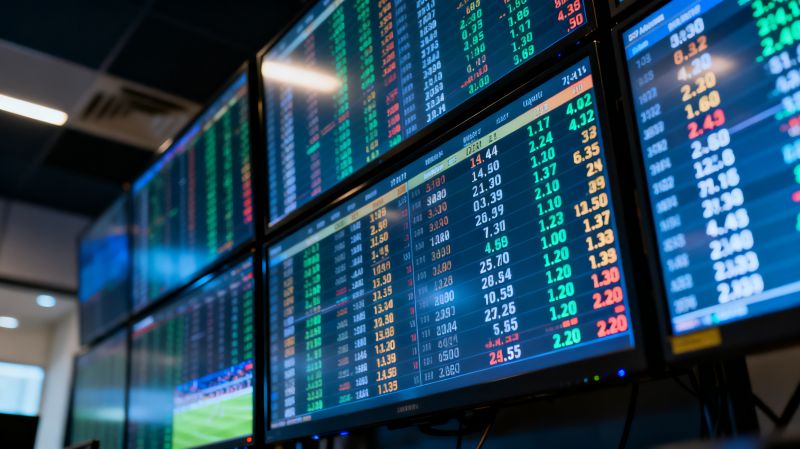
Every time a goal is scored in a live football match, odds shift within milliseconds. That speed isn't magic—it's the Sportradar live feed doing its quiet, relentless work. I've watched trading floors where screens flicker with numbers, and the difference between profit and loss often comes down to who gets the data first. Sportradar's live feed isn't just a pipeline;it's the circulatory system of real-time betting markets.The raw mechanics matter. Sportradar deploys scouts at thousands of matches worldwide, each trained to input events—shots, corners, cards—into a handheld device. That data travels to central servers, gets validated。and is pushed to bookmakers and media clients via the Sportradar live feed. The latency?Often under a second. I remember talking to a trader who said a two-second delay in the Sportradar live feed during a Premier League match felt like betting on yesterday's news. That's not exaggeration;it's the reality of in-play markets where margins are razor-thin.
What sets the Sportradar live feed apart is its breadth. Tennis, basketball, table tennis。even esports—the coverage extends to niche leagues that most punters ignore until they see value. I've seen lower-tier Swedish hockey matches attract serious liquidity because the feed provides granular stats like shot attempts and faceoff wins. Bookmakers love it because it lets them offer more markets, and bettors love it because they can exploit inefficiencies. Of course, the feed isn't flawless. Scouts are human, and errors happen—a missed red card or a misattributed goal can cascade into bad pricing. Sportradar has audit layers to catch these, but no system is perfect.From a trading perspective, the Sportradar live feed is both a gift and a trap. It democratizes access to real-time data。but it also levels the playing field in ways that squeeze margins. I've seen smaller bookies rely entirely on the feed to auto-manage risk, only to get burned when a sudden momentum shift—say, a flurry of corners—isn't fully captured by the scout's inputs. The feed tells you what's happening, not why. That gap is where human judgment still matters. A trader who understands the flow of a match can anticipate the next event better than a raw data stream.
Looking ahead, the Sportradar live feed will likely integrate more computer vision and automated event detection. Some trials already use AI to track ball trajectories, reducing reliance on manual input. That could cut latency further, but it also raises questions about redundancy and cost. For now, the feed remains a hybrid—human eyes plus machines. And that's probably the right balance. In a world where milliseconds decide outcomes。the Sportradar live feed is the unsung referee of the betting industry, blowing the whistle on every play before the crowd even reacts.