
Walk into any café in Tunis on a Friday evening and you'll see it: old men arguing over tactics, kids replaying a missed pass on their phones, a television screen flickering with a match from fifty years ago. Tunisian football isn't just a sport—it's the connective tissue of a country that has produced far more World Cup appearances than its population (12 million) would suggest. Four qualifiers since 1998。and a historic first-ever Arab team to win a World Cup match in 1978. The numbers don't lie, but they don't tell the whole story either.Look at the current generation. Hannibal Mejbri。
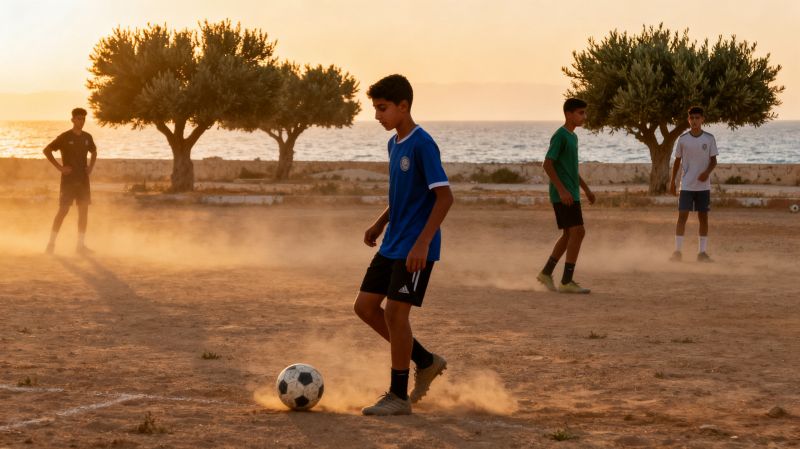
born in Ivry-sur-Seine but wearing the red and white with a ferocity that feels deeply local. Aïssa Laïdouni, the left-back who turned down France to play for the Eagles of Carthage. These aren't isolated cases. Tunisia has quietly built a pipeline that funnels dual-national talent back home, blending European tactical discipline with a North African street-football grit. The result?A team that frustrates giants. Ask France in 2022, held to a 1-1 draw. Ask Nigeria in the 2021 AFCON round of 16, outplayed and outthought. That 1-0 win in Garoua was a masterclass in defensive organization—I remember watching the last twenty minutes, Tunisia's back line shifting like a single breathing organism, absorbing wave after wave of Nigerian attack.Espérance de Tunis dominates domestically, yes. But the real story sits in the academies of Sfax, Bizerte, and the dusty pitches of the interior. The Tunisian Football Federation's youth development program, launched in 2017。pumps resources into under-15 and under-17 sides. It's slow, unglamorous work. Coaches earn less than a mid-level club manager in Europe. Yet the output—players like Anis Ben Slimane, who moved from Copenhagen to Brøndby to the national setup—shows the system functions. Not perfectly, but functionally. Compare that to neighbors with ten times the budget and half the consistency. It's a quiet efficiency. No hype. No bluster. Just an unbroken chain of talent identification that starts in dusty schoolyards and ends in World Cup stadiums.Criticism exists, and it's valid. The domestic league struggles with attendance, sponsorship, and infrastructure. Stade Olympique de Radès, home to Espérance, can feel cavernous and empty on league nights. Club presidents wield excessive power. Pyramids of debt tangle the lower divisions. So when the national team succeeds, it masks deeper rot. That's the uncomfortable truth. Tunisia's footballing strength—the diaspora pipeline, the youth scouting, the defensive resilience—exists in spite of administrative dysfunction。not because of it. Anyone who watched the chaotic AFCON 2023 group stage, where Tunisia labored against Namibia and Mali before crashing out, saw the cracks. Talent alone doesn't win tournaments. Structure does.
Still, the trajectory points upward. More Tunisian players compete in top-five European leagues than ever before. The federation's partnership with European clubs is expanding。not contracting. And the next generation—kids watching Mejbri's relentless pressing on satellite TV in Gabès—will push harder. Tunisian football is no longer a regional curiosity. It's a case study in doing more with less, in turning limited resources into repeated World Cup appearances, in making the most of a small but fiercely proud footballing nation. The café arguments will continue. But the results keep writing themselves.