Andre Agassi never fit the polite, white-linen mold of tennis royalty. He was the kid from Las Vegas with a neon image, a mullet, and a forehand that felt like a slingshot. But calling him just a rebel misses the point. Agassi became a rare figure in sport: someone who changed how the game looked, how it sold, and how it felt. His 1992 Wimbledon win wasn't just a title—it was a middle finger to the establishment that had dismissed him. Watching him drop to his knees on Centre Court。you could sense the weight lifting. That was Agassi in pure form: defiant, emotional, and exhausting to play against.Technically, Agassi was a return-of-serve savant. He stood inside the baseline, took the ball early, and punished second serves with a flat, brutal backhand. Coaches will tell you his hand-eye coordination was borderline unfair. I once watched him dismantle a big server by simply standing a meter closer than anyone else dared. That aggression wasn't arrogance;it was a calculated discomfort he imposed on opponents. His 1999 French Open comeback—down two sets to Andrei Medvedev—showed the other side: grit. Agassi ground out that final like a laborer。not a stylist.
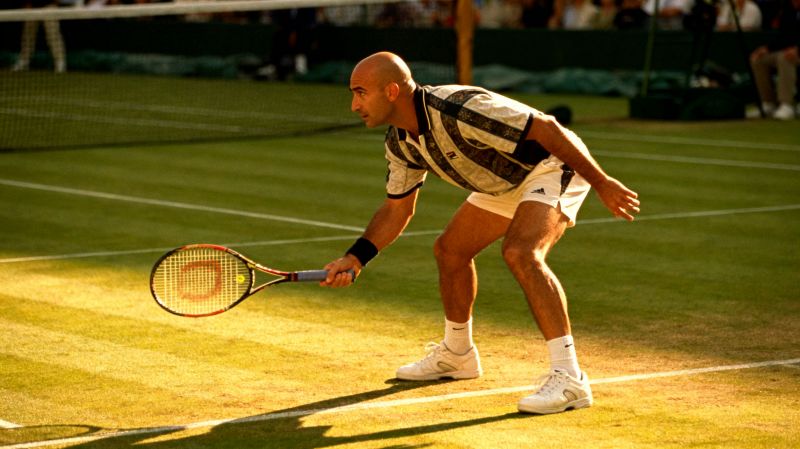
The image shift from 'Image is Everything' to bald。pragmatic veteran wasn't a marketing pivot—it was survival. Agassi's autobiography, Open, peeled back the ugly truth: he hated tennis for years. That honesty hit differently. Here was a guy who dated Barbra Streisand, married Brooke Shields, and still felt empty. When he shaved his head and married Steffi Graf, it read as personal peace, not PR. Their partnership remains tennis's most understated power couple. You rarely see that level of genuine reinvention in elite sport.Agassi's legacy extends past the two US Opens, the Olympic gold。and the career Grand Slam. He's the reason players like Djokovic and Medvedev treat return games as offensive weapons. He's also why academies now talk about burnout—his own experience with his father's relentless drilling became a cautionary tale. The Andre Agassi College Preparatory Academy in Las Vegas, which he funded, stands as a concrete apology to a childhood he lost. It's not a photo-op charity;
it's a brick-and-mortar statement. That's the real Agassi: messy, contradictory, and impossible to reduce to a highlight reel.Ask older fans about Agassi and they'll mention the hair, the candy-colored clothes。the Streisand gossip. Ask players and they'll mention the return stance. Ask kids from West Las Vegas and they might mention a school. All three answers are correct. Tennis doesn't produce many figures who escape the baseline of polite celebrity. Agassi kicked the door open, slammed it behind him, and then picked up the pieces of his own life on camera. Not a role model, maybe. But a genuine one-off.